

Menu
Discovering that your client has an eating disorder can be stressful and challenging.
You know your client is facing a dangerous, potentially life-threatening condition, but it can seem impossible to get them to recognize that their behavior is a problem – even when it is taking over their life.
So, it’s no wonder few clinicians feel prepared to tackle the unremitting intensity of working with a client’s eating disorder.
But not you.
Because in this LIVE online workshop 31 January, Morag Paterson, MSc Counselling Psychology, GradDip Psychology, MA Sociology & Social Policy, MAPS, one of Australia’s leading clinicians in the treatment of eating disorders will share practical techniques from CBT-E, DBT, Schema Therapy, and Mindfulness...
...so that next time you see a client with an eating disorder, you’ll feel confident and prepared to guide them towards lasting healing.
You’ll leave this focused training with proven interventions to build your client’s trust and motivation to change so you can overcome resistance and ambivalence even when they have a deep-rooted relationship with their illness.
Best of all, you’ll walk away with new skills and treatment strategies that will help your clients replace their self-destructive behavior and make peace with food and their bodies once and for all.
Register now to secure your spot.
PESI Australia, in collaboration with PESI in the USA, offers quality online continuing professional development events from the leaders in the field at a standard recognized by professional associations including psychology, social work, occupational therapy, alcohol and drug professionals, counselling and psychotherapy. On completion of the training, a Professional Development Certificate is issued after the individual has answered and submitted a quiz and course evaluation. This program is worth 7 hours CPD for points calculation by your association.
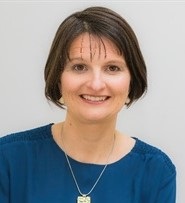
Morag Paterson is a Senior Counselling Psychologist with specialist endorsement through AHPRA. She qualified at University of Roehamptom (London, UK) in 2005. Morag has worked in Psychology related fields for over 20 years where she has gathered a wealth of clinical knowledge and experience. In London, she was a Manager in two Primary Care Mental Health Services, where she managed and supervised Psychologists and Therapists. She arrived in Sydney seven years ago and started her Australian Psychology career in a Private Hospital with people with Addictions. She then undertook a role managing the Inpatient and Day Patient Therapy Services for an Eating Disorder Unit in a Private hospital in Sydney. In this role, she managed and supervised therapy staff as well as developed a Therapy Treatment Program for the Day Program. The treatment program modules drew on the therapeutic frameworks of Motivational Interviewing, CBT-E, DBT and ACT. Morag currently works in private practice in Ultimo and in Sydney CBD.
Speaker Disclosures:
"Attend this workshop to develop your confidence in enabling positive change in your work with people with eating disorders." ~Morag Paterson
How you will benefit from attending this training:
Develop your knowledge and understanding of Disordered Eating
Learn assessment and formulation skills relating to Disordered Eating
Learn key therapeutic strategies to apply to people with Disordered Eating
Knowing where to start
Clarify the difference between disordered eating and eating disorders
Know which approach is most effective for Anorexia, Bulimia or Binge Eating Disorder
Unpack the emotional and behavioural complexity behind Eating Disorders
Understanding the field
Unpack common challenges in engagement and assessment
Get the critical elements of case formulation in place from the start
Access the most effective resources to educate clients and keep them on track
Evidence based Interventions for Eating Disorders
The 6 most useful eating disorder treatment techniques from Motivational Interviewing
Follow the 10 step guide through the ‘Enhanced CBT for Eating Disorders’ method
Learn to incorporate specific key strategies from Mindfulness, Schema Therapy and DBT
See skills in action with the audio/video resources and case examples
Finish with a full toolkit of evidence-based interventions, processes and resources
Please wait ...