

Menu
For twelve years Dr. Maté was the staff physician at a clinic for drug-addicted people in Vancouver’s Downtown Eastside, where he worked with patients challenged by hard-core drug addiction, mental illness, and HIV, including at Vancouver Supervised Injection Site.
In his recent bestselling book In The Realm Of Hungry Ghosts, he draws on cutting-edge science to illuminate where and how addictions originate and what they have in common. Contrary to what is often claimed, the source of addictions is not to be found in genes, but in the early childhood environment where the neurobiology of the brain’s reward pathways develops and where the emotional patterns that lead to addiction are wired into the unconscious. Stress, both then and later in life, creates the predisposition for addictions, whether to drugs, alcohol, nicotine or to behavioural addictions such as shopping or sex. Helping the addicted individual requires that we appreciate the function of the addiction in his or her life.
Once we recognize the roots of addiction and the lack it strives (in vain) to fill, we can develop a compassionate approach toward the addict, one that stands the best chance of restoring him or her to wholeness and health.
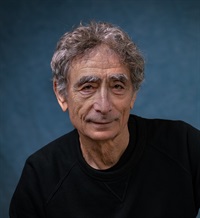
Gabor Maté, MD (pronounced GAH-bor MAH-tay) is a retired physician who, after 20 years of family practice and palliative care experience, worked for over a decade in Vancouver’s Downtown East Side with patients challenged by drug addiction and mental illness. The bestselling author of five books published in nearly 40 languages, including the award-winning In the Realm of Hungry Ghosts: Close Encounters with Addiction, Gabor is an internationally renowned speaker highly sought after for his expertise on addiction, trauma, childhood development, and the relationship of stress and illness. For his groundbreaking medical work and writing he has been awarded the Order of Canada, his country’s highest civilian distinction, and the Civic Merit Award from his hometown, Vancouver. His most recent book, The Myth of Normal: Trauma, Illness and Healing in a Toxic Culture is a New York Times and international bestseller.
Speaker Disclosures:
Financial: Dr. Gabor Maté receives compensation as a presenter. He receives royalties as a published author. Dr. Maté receives a speaking honorarium and recording and book royalties from PESI, Inc. He has no relevant financial relationships with ineligible organizations.
Non-financial: Dr. Gabor Maté has no relevant non-financial relationships.
Please wait ...
