

Digital Seminar

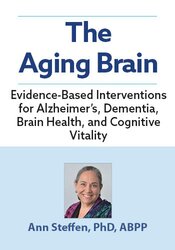
The Aging Brain: Evidence-Based Treatment & Interventions for Alzheimer's, Dementia, Brain Health, and Cognitive Vitality


Faculty:
Ann Steffen, PhD, ABPP
Duration:
6 Hours 21 Minutes
Format:
Audio and Video
Copyright:
07 Aug, 2025
Product Code:
POS150232
Media Type:
Digital Seminar
Access:
Never expires.


Description

Changes in brain health can be scary.

Clients worry about memory lapses, mental fog, and losing their independence. These fears can quickly spiral into anxiety, uncertainty, and even hopelessness, leaving them feeling stuck and powerless.

As a clinician, you know the challenge isn’t just calming their fears - it’s giving them the tools they need to protect their cognitive health and thrive as they age.

In this program, you’ll learn exactly how to help your clients flip the script on aging.

With evidence-based strategies, With evidence-based strategies, you’ll help clients move from fear to informed engagement, building confidence in their ability to maintain cognitive health and thrive as they age.


You’ll leave this training able to:

  • Build strong treatment plans that target cognitive functions and create healthy habits that stick.
  • Strengthen focus and brain health with proven strategies that help clients stay mentally agile and independent.
  • Catch early warning signs of dementia, depression, and delirium – and know how to intervene effectively.
  • Screen smarter and faster with simple, effective tools – and recognize when referral is needed

After this training, you’ll leave with a roadmap to empower your clients, position yourself as a trusted source of knowledge in brain health, and create real, lasting change for your clients.

Reserve your spot today!



CPD

Planning Committee Disclosure - No relevant relationships

All members of the PESI, Inc. planning committee have provided disclosures of financial relationships with ineligible organizations and any relevant non-financial relationships prior to planning content for this activity. None of the committee members had relevant financial relationships with ineligible companies or other potentially biasing relationships to disclose to learners.  For speaker disclosures, please see the faculty biography.


CPD

PESI Australia, in collaboration with PESI in the USA, offers quality online continuing professional development events from the leaders in the field at a standard recognized by professional associations including psychology, social work, occupational therapy, alcohol and drug professionals, counselling and psychotherapy. On completion of the training, a Professional Development Certificate is issued after the individual has answered and submitted a quiz and course evaluation. This program is worth 6.5 hours CPD for points calculation by your association.


Handouts

Faculty

Ann Steffen, PhD, ABPP Related seminars and products


Ann Steffen, PhD, ABPP, When it comes to supporting brain health and cognitive vitality in aging clients, Dr. Ann Steffen is the expert you want to learn from. With over 30 years of experience, she has trained thousands of health professionals, combining cutting-edge research with practical, real-world strategies that you can apply immediately.

Dr. Steffen’s extensive background includes a PhD in clinical psychology from Indiana University-Bloomington, advanced training in interdisciplinary geriatric care at the VA Palo Alto Health Care System, and a postdoctoral fellowship in clinical Geropsychology at Stanford University School of Medicine.

Currently, Dr. Steffen is a professor of psychology at the University of Missouri-St. Louis, where she has shaped the next generation of clinicians as the director of Gerontology programs and clinical training for the university’s APA-approved doctoral program in clinical psychology. As a faculty clinician at UM-St. Louis Community Psychological Service, she continues to provide hands-on expertise in supporting aging clients and their families.

Dr. Steffen holds dual board certifications in Behavioral & Cognitive Psychology and Geropsychology by the American Board of Professional Psychology (ABPP), a testament to her unmatched credentials. She is also the lead author of Treating Later Life Depression: A Cognitive Behavioral Approach, a go-to resource for clinicians from Oxford University Press’ Treatments That Work Series.

When you attend this course, you’ll learn directly from a nationally recognized leader who combines research-backed insights with practical strategies to help you transform the way you support your clients. Dr. Steffen’s proven expertise will leave you equipped to address cognitive concerns, empower aging clients, and enhance outcomes in your practice.


Speaker Disclosures:
Financial: Ann Steffen has an employment relationship with the University of Missouri-St. Louis and receives royalties as a published author. She receives a speaking honorarium with TZKSeminars, Inc. and PESI, Inc. She has no relevant financial relationships with ineligible organizations.
Non-financial: Ann Steffen is an Ad hoc reviewer for several peer review journals, for a complete list contact PESI, Inc. She is a member of the Alzheimer's Association.


Additional Info

Access for Self-Study (Non-Interactive)

Access never expires for this product.

For a more detailed outline that includes times or durations of time, if needed, please contact cepesi@pesi.com.


Objectives

  1. Identify normative cognitive changes associated with aging and distinguish them from cognitive impairments linked to dementia, depression, or delirium.
  2. Incorporate evidence-based strategies to promote brain health and prevent cognitive decline, tailored to the diverse cultural identities and needs of clients.
  3. Utilize clinical tools and interventions to address common warning signs of cognitive health concerns and determine when to refer clients for further evaluation.
  4. Develop treatment plans that target key areas of cognitive functioning, including attention, memory, and executive functions, while fostering healthy habit formation.
  5. Design aging-friendly sessions by integrating memory-support strategies, pacing adjustments, and culturally responsive practices to enhance client engagement and outcomes.
  6. Identify ethical considerations when discussing brain health with clients and families, including providing appropriate resources and referrals.

Outline

Understanding Cognitive Aging
  • Which cognitive changes naturally occur with age
  • The role of cultural and social identities in shaping brain health
  • Strengthen attention, memory, and executive functioning
  • Embrace variability in cognitive aging for personalized care
  • Practical tools to confidently discuss brain health with clients
  • The impact of co-occurring conditions like depression, anxiety, and chronic illness on cognitive function
  • Risks, limitations, and scope of practice
Advancing Brain Health in Diverse Populations
  • Proven strategies to prevent and slow cognitive decline
  • Key focus areas for impactful interventions
  • Design culturally responsive treatment plans
  • Effective methods to promote lasting brain-healthy habits
  • Nutritional and lifestyle interventions
Proactively Address Brain Health Concerns
  • Identify early signs of cognitive changes
  • Guidance to differentiate between dementia, depression, and delirium
  • Quick and reliable tools for screening and early detection
  • Streamlined referral pathways for advanced care
  • Ethical, compassionate conversations about brain health
  • Address common co-morbidities such as diabetes, hypertension, and cardiovascular issues affecting brain health
  • Supportive resources to empower clients and families
Create Client-Centered, Aging-Friendly Sessions
  • Innovative session formats tailored for older adults
  • Techniques to sustain attention and drive meaningful engagement
  • Seamless pacing and transitions for more effective sessions
  • Respond to questions about nutritional supplements and brain health
  • Ongoing professional growth to stay ahead in brain health care
  • Memory-boosting strategies to enhance retention
Real-World Case Studies and Applications
  • Examples and case vignettes showing how these strategies can be applied successfully
  • Discussion of challenges and solutions in real-life clinical scenarios
  • How addressing co-morbid mental health conditions improves cognitive outcomes
Long-Term Planning and Prevention
  • How to guide clients in creating long-term plans for cognitive health and aging well
  • Emphasis on prevention strategies even before cognitive issues arise
  • Sustain cognitive vitality in daily life

Target Audience

  • Counsellors
  • Marriage and Family Therapists
  • Social Workers
  • Psychologists
  • Physicians
  • Psychotherapists
  • Other Mental Health Professionals

Please wait ...

Back to Top