

Digital Seminar

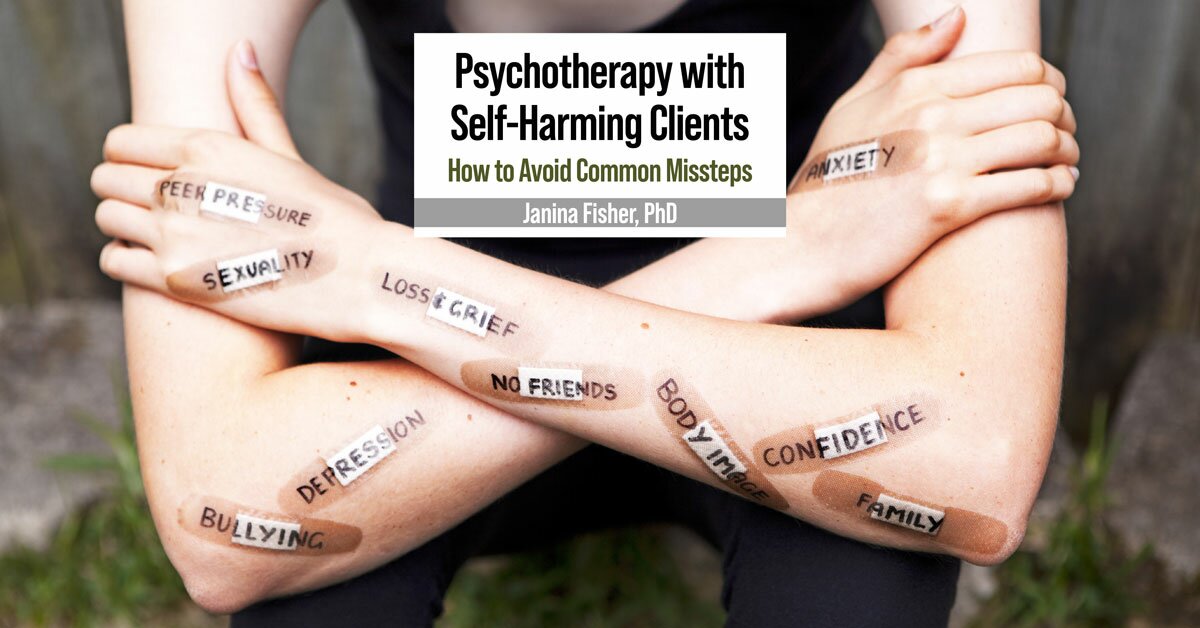
Psychotherapy with Self-Harming Clients

How to Avoid Common Missteps

Faculty:
Janina Fisher, PhD
Duration:
1 Hour
Copyright:
03 Oct, 2023
Product Code:
POS059571
Media Type:
Digital Seminar
Access:
Never expires.


Description

For therapists working with clients who self-harm, safety is the most pressing concern, and missteps can be damaging. Join Dr. Janina Fisher for this essential training on the most common mistakes made by therapists in working with unsafe behavior. You'll learn: 

  • How to validate the relief offered by unsafe behavior without increasing its frequency 
  • What to say to increase clients' curiosity to regulate the nervous system and decrease shame 
  • Top techniques to help clients become more concerned about the care of their bodies 

CPD

Planning Committee Disclosure - No relevant relationships

All members of the PESI, Inc. planning committee have provided disclosures of financial relationships with ineligible organizations and any relevant non-financial relationships prior to planning content for this activity. None of the committee members had relevant financial relationships with ineligible companies or other potentially biasing relationships to disclose to learners.  For speaker disclosures, please see the faculty biography.


CPD

PESI Australia, in collaboration with PESI in the USA, offers quality online continuing professional development events from the leaders in the field at a standard recognized by professional associations including psychology, social work, occupational therapy, alcohol and drug professionals, counselling and psychotherapy. On completion of the training, a Professional Development Certificate is issued after the individual has answered and submitted a quiz and course evaluation. This program is worth 1 hours CPD for points calculation by your association.


Handouts

Faculty

Janina Fisher, PhD's Profile

Janina Fisher, PhD Related seminars and products


Janina Fisher, PhD, is a licensed clinical psychologist and former instructor at The Trauma Center, a research and treatment center founded by Bessel van der Kolk. Known as an expert on the treatment of trauma, Dr. Fisher has also been treating individuals, couples, and families since 1980.

She is past president of the New England Society for the Treatment of Trauma and Dissociation, an EMDR International Association Credit Provider, Assistant Educational Director of the Sensorimotor Psychotherapy Institute, and a former Instructor, at Harvard Medical School. Dr. Fisher lectures and teaches nationally and internationally on topics related to the integration of the neurobiological research and newer trauma treatment paradigms into traditional therapeutic modalities.

She is co-author with Pat Ogden of Sensorimotor Psychotherapy: Interventions for Attachment and Trauma (2015) and author of Healing the Fragmented Selves of Trauma Survivors: Overcoming Internal Self-Alienation (2017) and the forthcoming book, Working with the Neurobiological Legacy of Trauma (in press).


Speaker Disclosures:
Financial: Dr. Janina Fisher is an international expert and consultant on Trauma and Dissociation. She is a consultant for Khiron House Clinics and the Massachusetts Department of MH Restraint and Seclusion Initiative. Dr. Fisher receives royalties as a published author. She receives a speaking honorarium, recording royalties and book royalties from Psychotherapy Networker and PESI, Inc. Dr. Fisher has no relevant financial relationships with ineligible organizations.
Non-financial: Dr. Janina Fisher is on the advisory board for the Trauma Research Foundation. She is a patron of the Bowlby Center.


Additional Info

Access for Self-Study (Non-Interactive)

Access never expires for this product.


Objectives

  1. Apply knowledge of neurobiology to explain how trauma-related cues increase symptoms 
  2. Utilize mindfulness-based interventions to demonstrate empathic understanding of the self-harming client’s experience 
  3. Employ at least two interventions for stabilizing self-destructive behavior 

Outline

Trauma and self-harm – recovering from either means recovering from both  

  • The neurobiology of trauma and how triggers work 
  • Procedural learning of self-destructive behavior 
  • How unsafe behavior “helps” and the need to change the client’s relationship to self-destructive behavior 

How to address common mistakes made by therapists in working with unsafe behavior 

  • The failure to validate the relief stimulated by self-harm 
  • Forgetting that shame will make it feel normal to evade and unsafe to disclose 
  • Tools for working with trauma survivors on care of the body 
  • Techniques for stepping out of the role of safety spokesperson  
  • Curiosity, mindful awareness, psychoeducation, and other important interventions 
  • Limitations of the research and potential risks 

Target Audience

  • Addiction Professionals 
  • Counsellors 
  • Marriage & Family Therapists 
  • Psychologists 
  • Psychiatrists 
  • Social Workers 
  • Other Mental Health Professionals 

Please wait ...

Back to Top