

Digital Seminar

Managing the Fallout of Narcissistic Abuse: Addressing the Impact of High-Conflict Personality Styles


Faculty:
Ramani Durvasula, PhD, LCP
Duration:
2 Hours
Copyright:
18 Mar, 2023
Product Code:
NOS096304
Media Type:
Digital Seminar
Access:
Never expires.


Description

It’s essential that clinicians understand not just the phenomenon of narcissistic abuse (or antagonistic relational abuse), but the fallout from it (the distress, discomfort, and dysfunction). In this session, we’ll explore the nature of narcissism and antagonism as a personality style; how it shows up in relationships; the vulnerabilities people have to getting stuck in these relationships; and techniques for working with these clients suffering narcissistic abuse. You'll learn an intuitive and actionable road map that you can use with clients in high-conflict divorces and workplace-abuse cases. You’ll discover:
  • How to identify the characteristics of narcissistic abuse that are often misdiagnosed
  • Specific vulnerabilities to entering and getting stuck in relationships characterized by narcissistic abuse
  • An actionable treatment approach—applicable to any practice—that includes psychoeducation, assessment, fostering radical acceptance, and striving for growth
  • Ethical issues in working with clients experiencing narcissistic abuse

CPD

Planning Committee Disclosure - No relevant relationships

All members of the PESI, Inc. planning committee have provided disclosures of financial relationships with ineligible organizations and any relevant non-financial relationships prior to planning content for this activity. None of the committee members had relevant financial relationships with ineligible companies or other potentially biasing relationships to disclose to learners.  For speaker disclosures, please see the faculty biography.


CPD

PESI Australia, in collaboration with PESI in the USA, offers quality online continuing professional development events from the leaders in the field at a standard recognized by professional associations including psychology, social work, occupational therapy, alcohol and drug professionals, counselling and psychotherapy. On completion of the training, a Professional Development Certificate is issued after the individual has answered and submitted a quiz and course evaluation. This program is worth 2.0 hours CPD for points calculation by your association.


Handouts

Faculty

Ramani Durvasula, PhD, LCP's Profile

Ramani Durvasula, PhD, LCP Related seminars and products


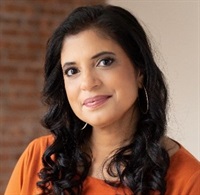
Ramani Durvasula, PhD is a psychologist in California, the founder and CEO of LUNA Education, Training and Consulting, and professor emerita of psychology at California State University Los Angeles. She is The New York Times bestselling author of It’s Not You: Identifying and Healing from Narcissistic People. She is also the author of multiple other books including ”Don’t You Know Who I Am”: How to Stay Sane in the Era of Narcissism, Entitlement and Incivility and Should I Stay or Should I Go: Surviving a Relationship with a Narcissist. She has lectured and trained therapists around the world on best practices on working with clients experiencing narcissistic abuse and has developed a 36 hour virtual training and certification program in conjunction with PESI to train clinicians on how to use an antagonism-informed approach with clients experiencing narcissistic relationships.

Dr. Durvasula hosts a popular YouTube channel with over 2 million subscribers, maintains a program offering support and education to thousands of survivors, and is a featured expert on the digital media platform MedCircle. She also maintains an engaged online network called the Dr. Ramani Network. She has also been widely involved in the governance of the American Psychological Association, including the APA Leadership Institute for Women in Psychology and the APA Minority Fellowship Program. Dr. Durvasula received her MA and PhD degrees in clinical psychology from UCLA and completed her internship and post-doctoral training at the UCLA Department of Psychiatry. She completed her Bachelor of Science degree in psychology, with a minor in sociology in 1988 at the University of Connecticut. She resides in Los Angeles, CA.


Speaker Disclosures:
Financial: Ramani Durvasula is the founder and CEO of LUNA Education, Training, and Consulting and has an employment relationship with the University of Johannesburg. Ramani Durvasula receives royalties as a published author. She receives a speaking honorarium and recording royalties from Psychotherapy Networker and PESI, Inc. She has no relevant financial relationships with ineligible organizations.
Non-financial: Ramani Durvasula is an associate editor for Behavioral Medicine. She is a member of the American Psychological Association, the Association for Psychological Science Society for Behavioral Medicine, and the International Association of Applied Psychology.


Objectives

  1. Distinguish the dynamics of narcissistic relationships.
  2. Assess patterns associated with narcissistic abuse.
  3. Catalogue the fallout from narcissistic abuse that clients experience, and co-occurring patterns that can complicate diagnosis and assessment.
  4. Construct an actionable framework for working with clients presenting with the distress, discomfort and dysfunction entailed by experiencing narcissistic abuse, and fostering growth in these clients.
  5. Evaluate ethical issues which arise in working with clients experiencing narcissistic abuse.

Outline

  • A holistic view of the dynamics of narcissism, narcissistic personality disorder, and “narcissism-adjacent” personality styles
  • Core dynamics in narcissistic relationships
  • The vulnerabilities to getting into and remaining in these relationships in adulthood
  • The phenomenon of narcissistic abuse and how to help clients understand etiologies without excusing this behavior
  • The consequences of narcissistic abuse (behavioral, cognitive, emotional, interpersonal, identity, post-traumatic, and physical health)
  • An actionable framework for working with clients experiencing narcissistic abuse
  • Ethical concerns when working with narcissistic abuse including awareness of clinician lived experience, competence, boundaries, safety, reporting laws, and confidentiality
  • Assess limits of the research and potential risks

Target Audience

  • Counsellors
  • Social Workers
  • Psychologists
  • Marriage & Family Therapists
  • Addiction Counselors
  • Physicians
  • Physician Assistants
  • Nurses
  • Nurse Practitioners 
  • Other Mental Health Professionals

Please wait ...

Back to Top